












EXCHANGE STUDENT PROGRAM
Our Exchange Student Program welcomes international students from partner universities who wish to enrich their academic journey while experiencing a new cultural and educational environment. As an exchange student, you will have the opportunity to study, interact with students from diverse backgrounds, improve your French and gain valuable international experience. The program is designed to offer academic flexibility, high-quality teaching, and strong academic support throughout your stay.
The school creates a socially interactive with teamwork and shared experience. The human size of the school, coupled with close and frequent contact with professors and professional tutors, offers an informal and highly effective student-centered learning environment.
Fall semester (September – December)
We strive to make the world a better place through design: ~70 professional designers come to our school to share their knowledge, know-how and passion with our students.
Small teams of students work on real cases from companies to offer them customized and sustainable solutions.
If you are interested in global design, in real life design project management and in having a unique human experience, come and join the Ecole Supérieure de Design de Troyes.
Intensive French Seminar (5 ECTS)
From beginner to advanced level. 1-week early September
Regular French (2 ECTS)
From beginner to advanced level. During the semester every Thursday afternoon (if compatible with planning)
- Please note that there might be some overlapping in your schedule if you choose courses from different years (both Bachelor and Master levels).
- Courses are subject to availability.
- Extra courses at Bachelor and Master levels are also available in French.
- In addition, you can also pick Tourism (Ecole Supérieure de Tourisme) and Management courses (SCBS –South Champagne Business School) on the Brossolette campus if your home university accepts them in your credits.
WORKSHOPS
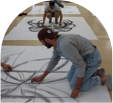
Focused and condensed workshops during which students will use a design project methodology to answer a societal issue, thus developing their team-player abilities. These workshops are led by 2 or 3 designers. The topic is always unique.
• Workshop 1 oriented graphic design (2 ECTS)
(October)
• Workshop 2 oriented digital design (smart object) (2 ECTS)
(November)
• Workshop 3, Exploration (2 ECTS)
(November)
COURSE LIST
“Rules” of Graphic design: being able to question, experiment and innovate regarding page layout (use In-Design).
1. Review visual devices and develop critical and analytical thinking -Apply the basis of elementary typographical rules
2. Use the graphics rules to test and question the typographic and image composing work
3. Build a consistent message mobilizing methodology, rigor and graphics experimentation
4. Choose the tools offered by all of the softwares in the Adobe Creative Suite consistent with the project you have to develop
This module aims to address visual identity, from its design to its deployment.
1. Understand and create client specifications or client briefs
2. Represent a written message in visual form (message)
3. Create a signage system
4. Contextualize a sign: spatialization and flexibility
5. Discover and use different typographies Questions and analyzes addressed: which technology to use? Explain the choice of technology? What message do these choices convey? How do technological choices contribute to the evolution of the entire system?
On the other hand, through art direction, the student will have to develop a form of autonomy in the choice of language and its transmission. Each student will create a visual universe nourished by references and will think about the methods of transmission through chosen media.
This will be done in particular through graphic experiments, and will apply to various media (2D, 3D, space, object).
The course is aimed to students that are willing to use Photography as an educational tool, artistic medium and to those who are interested in expanding their notions on Photography as a medium that has different aspects and notions and thus explores the concept and meaning of the photographic image. The discussion is guided through
the examples from photography as art and as everyday medium (private, public, applied, vernacular photography).
In order to give meaning to and enrich the research approach, personal, critical, and coherent reflection is built with the contribution of social and human sciences.
Address the main axes linking the practice of design to philosophical thought to get a better approach of what design is
1. Read authors who are recognized in the design field
2. Knowing how to associate and transcribe in writing different design projects, photos and/or texts to express the links that unite them (reconciliation, opposition, attraction, inspiration, etc.) 3. Develop an analytical mind and understand the notion of theorization of a subject based on works, photos, texts and design projects
4. Identify a theme and establish relevant concerns and issues
5. Build critical thinking
This course allows students to approach different methods of structuring thought with a view to a verbal transmission of a project. The course is structured around the foundations of rhetoric and the art of public speaking (eloquence, persuasion, and ethical effect). This course also explains the oral presentation format called Pecha kucha (addressing formal constraints: narration, rhythm, conciseness and graphic expression).
1. Identify and understand the basis of the Art of Eloquence
2. Analyze rhetoric and apply this approach when pitching a design project
3. Apply the Pecha kucha technics when speaking and structuring design project presentations
This course lists different animation techniques (rottoscoping, stop-motion, traditional animation, motion decomposition….) and allows you to acquire technical basics of making the moving image.
1. narrative techniques (storyboarding, cinematographic language,…).
2. technical tools (aftereffect, photoshop, première,..)
Explore the intricacies of 3D printing within a production environment. Understand additive manufacturing as well as its benefits before testing and experimenting the process of 3D printing. 1. Discover additive manufacturing (materials and technics) 2. Preparing instructions for the machine 3. Go through the process of additive production (for example preparing, printing, and postproduction inspection)
Please note that you are expected to already know how to use 3D modeling software.
COURSE LIST
(from the 8th to the 12th of September)
Over an intensive week, students will use a design project methodology to answer a societal issue, thus developing their team-player abilities.
Identify and integrate the thoughts, texts, technical, economic and social events that have a major influence on the practice of contemporary design. Conduct a literature search. Produce a critical document. Choosing visual and oral communication tools to defend a critical position.
This course enables students to understand what ‘creating value’ means, what a business model is, and what it means regarding a product or a service and its users.
Then, students will learn to recognize and to structure a valuable and sustainable business model for an organization, the added value of design in companies, and in particular innovative companies. It allows students to identify the contribution of their skills in the development of a project or the implementation of a change.
(2 intensive days at the beginning of November)
This intensive two-day module should allow students to make the right formal choices on a given issue/theme in a short time
Understand and analyze the impact of formal choices on conceptual choices and vice versa
Knowing how to diversify formal responses on the same theme
Correctly associate the form of a project with what it means and conveys to the receiver/user
This intensive two-day module should allow students to make the right formal choices on a given issue/theme in a short time. 1. Understand and analyze the impact of formal choices on conceptual choices and vice versa 2. Knowing how to diversify formal responses on the same theme 3. Correctly associate the form of a project with what it means and conveys to the receiver/user
More information?
Contact us
Sophie LORANDEAU
Head of International Mobility
sophie.lorandeau@yschools.fr